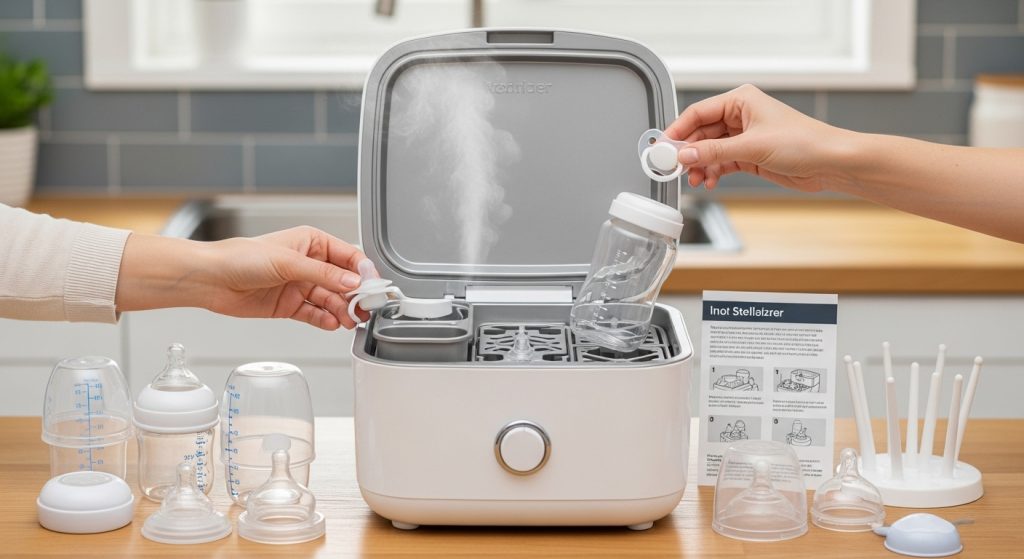
Keeping baby bottles clean isn’t just about hygiene—it’s about protecting your baby’s developing immune system. Especially in the early months, proper sterilization can help prevent infections, stomach issues, and unnecessary discomfort.
Disclosure: Some links may be affiliate links. As an Amazon Associate I earn from qualifying purchases.
In this guide, I’ll walk you through how to properly sterilize baby bottles step by step, along with practical tips from real-life experience that actually make the process easier.
Why Sterilizing Baby Bottles Matters
Newborns have sensitive immune systems, which makes them more vulnerable to bacteria. Even after washing, milk residue can still leave behind germs if not properly sterilized.
From experience, skipping sterilization—even occasionally—can sometimes lead to:
- Mild stomach discomfort
- Increased gas or fussiness
- Higher risk of infections in younger babies
For babies under 3 months, sterilizing is especially important. After that, many parents gradually reduce frequency depending on their pediatrician’s advice.
Step-by-Step Guide to Sterilizing Baby Bottles
Step 1: Wash Thoroughly First
Sterilizing doesn’t replace cleaning—it comes after.
- Rinse bottles immediately after feeding
- Use warm soapy water
- Scrub all parts (nipples, rings, caps) with a bottle brush
- Pay special attention to small crevices
👉 Real tip: Don’t let milk dry inside the bottle—it makes cleaning much harder later.
Step 2: Choose Your Sterilization Method
There are several effective ways to sterilize bottles. The best method depends on your routine and lifestyle.
Boiling (Traditional Method)
- Place bottles in a pot of water
- Bring to a boil for 5–10 minutes
- Ensure all parts are fully submerged
👉 My experience: This is the most reliable backup method, especially when traveling or without equipment.
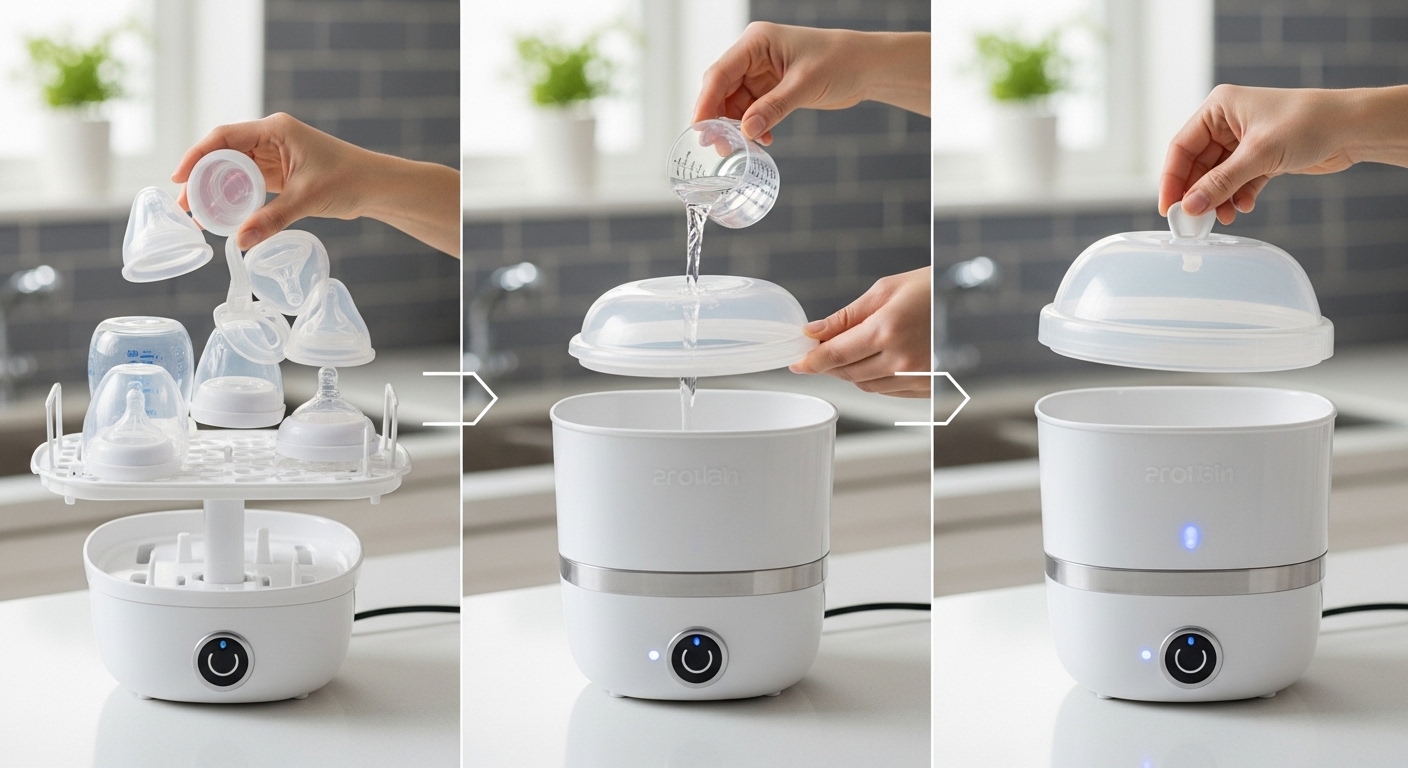
Steam Sterilizing
- Use steam (electric or microwave method)
- Typically takes around 5–10 minutes
- Kills most bacteria efficiently
👉 Real tip: Steam is faster and less hassle than boiling once you get used to it.
Cold Water Sterilizing
- Use sterilizing solution or tablets
- Soak bottles for the recommended time (usually 30 minutes)
👉 My experience: Great for convenience, but you’ll need to be consistent with solution changes.
Step 3: Dry Properly
After sterilizing:
- Remove bottles with clean hands or tongs
- Place on a clean drying rack
- Let air dry completely
👉 Avoid using towels—this can reintroduce bacteria.
Step 4: Store Safely
Once dry:
- Assemble bottles only when needed
- Store in a clean, covered area
👉 Real tip: Don’t leave sterilized bottles out too long—use them within 24 hours for best hygiene.
Common Mistakes to Avoid
❌ Skipping the cleaning step
Sterilizing dirty bottles doesn’t work—milk residue protects bacteria.
❌ Overhandling after sterilizing
Touching the inside of bottles or nipples can re-contaminate them.
❌ Not disassembling parts
Always separate all components before sterilizing.
❌ Inconsistent routine
Sterilizing occasionally isn’t as effective as doing it regularly, especially in the newborn stage.
Real-Life Experience: What Actually Works
From day-to-day parenting, here’s what tends to work best:
- Keep a routine: Sterilize once daily in batches instead of after every feed
- Have extras ready: Running out of clean bottles at night is stressful
- Stay flexible: Boiling is always a reliable backup
In the early weeks, I found sterilizing everything felt overwhelming. But once it became part of a routine, it only took a few extra minutes a day.
How Often Should You Sterilize?
- 0–3 months: After every use (recommended)
- 3–6 months: Once daily or as needed
- 6+ months: Less frequent if baby is healthy and bottles are cleaned well
Always adjust based on your baby’s health and your pediatrician’s advice.
Final Thoughts
Sterilizing baby bottles might seem like a small task, but it plays a big role in keeping your baby healthy—especially in those early months.
The key isn’t choosing the “perfect” method—it’s being consistent and doing it properly.
Once you find a routine that fits your lifestyle, it becomes second nature—and one less thing to worry about as a parent.