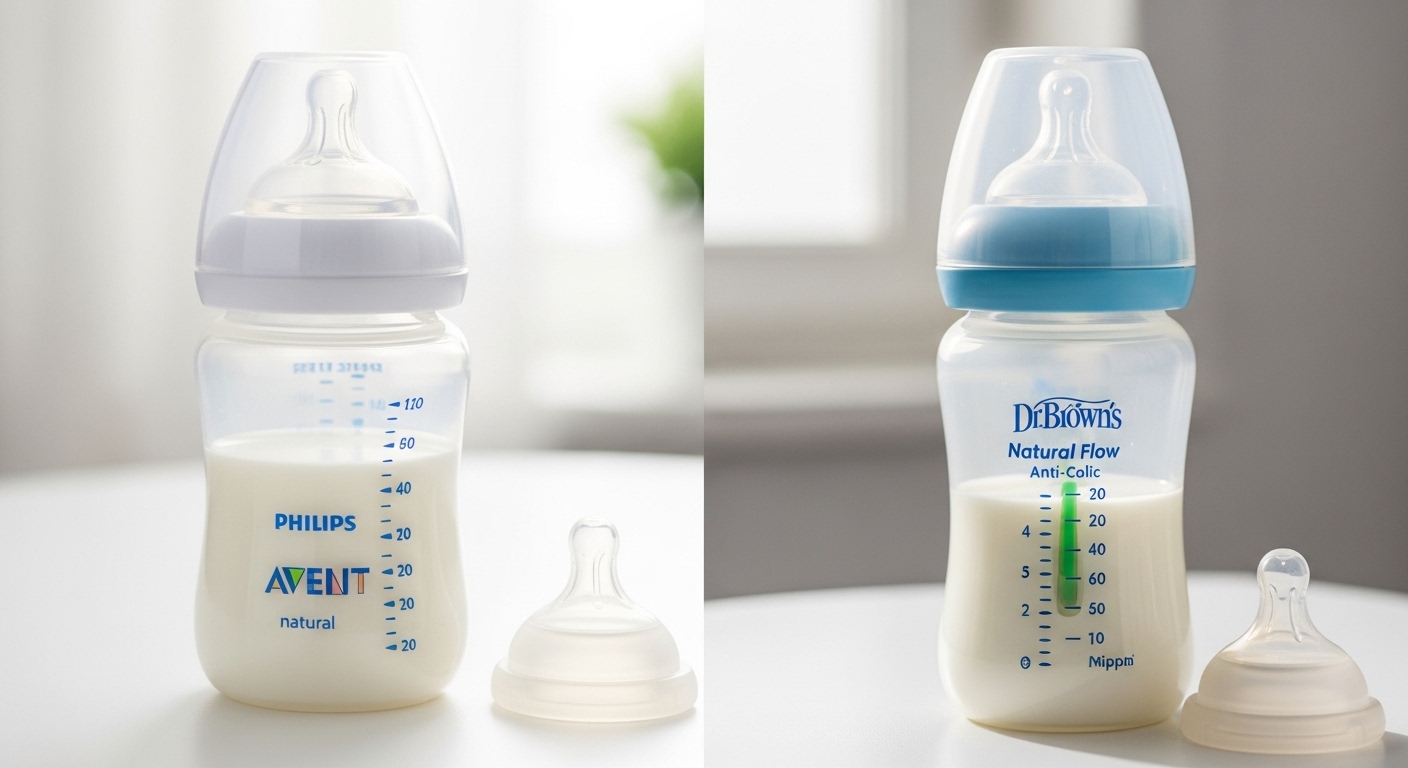
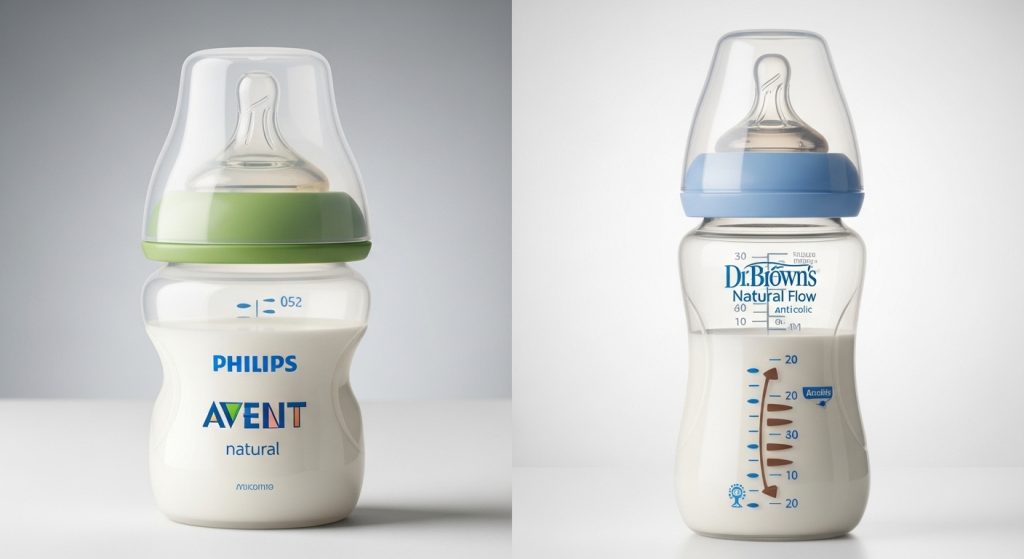
Choosing between Philips Avent and Dr. Brown’s can be confusing—both are trusted by parents, but they solve feeding problems in very different ways. The “better” option really depends on your baby’s needs, not just brand popularity.
Disclosure: Some links may be affiliate links. As an Amazon Associate I earn from qualifying purchases.
This guide breaks down the real differences, pros & cons, and who each bottle is best for—based on practical, everyday use.
Core Difference: Simple vs Technical Design
The biggest difference comes down to feeding philosophy.
- Philips Avent focuses on a natural, breast-like feeding experience
- Dr. Brown’s focuses on reducing gas and colic as much as possible
One prioritizes simplicity and natural flow, while the other prioritizes function and digestion support.
Philips Avent: Pros & Cons
✅ Pros
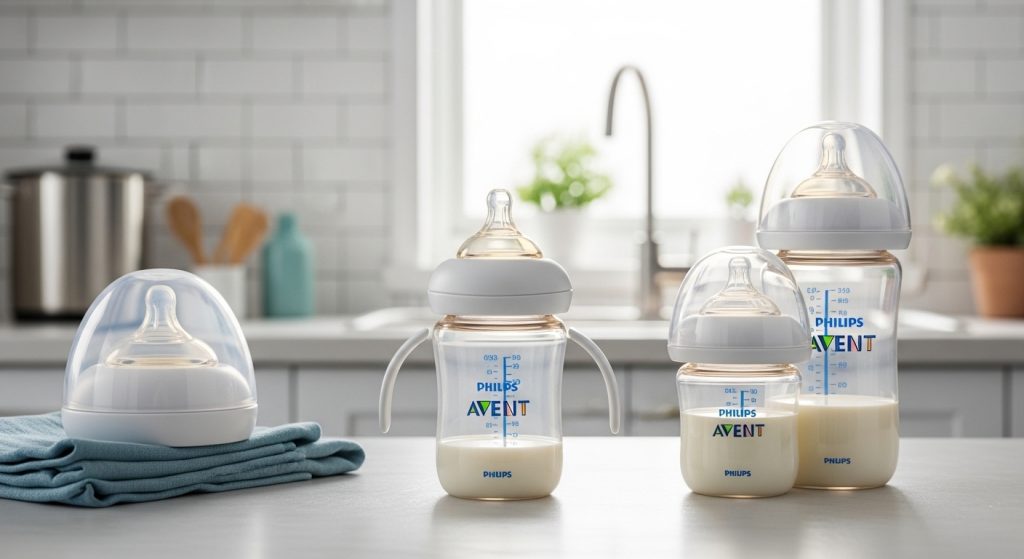
- Very natural nipple shape, ideal for breastfed babies
- Encourages baby-led feeding (baby controls milk flow)
- Fewer parts → easy to clean and assemble
- Smooth transition between breast and bottle
❌ Cons
- Anti-colic system is basic compared to competitors
- Some babies may find the flow too slow at first
- Not ideal for babies with serious gas issues
Real Experience
Philips Avent feels intuitive and stress-free. If your baby already breastfeeds well, this bottle usually works without much resistance. It’s especially helpful for parents who want to keep feeding as natural as possible.
Dr. Brown’s: Pros & Cons
✅ Pros
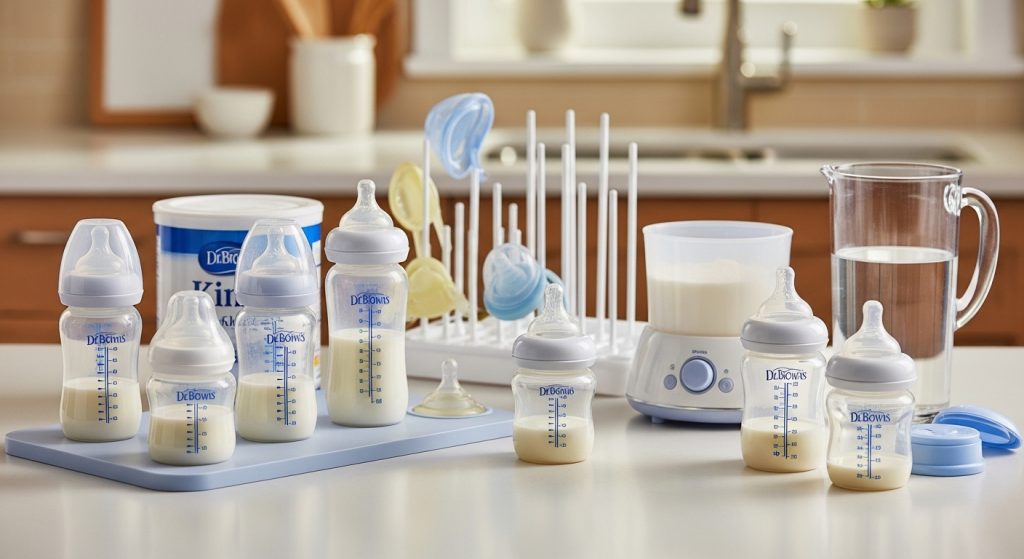
- One of the most effective anti-colic systems available
- Reduces air intake, gas, and spit-up significantly
- Consistent milk flow
- Often recommended for babies with reflux or colic
❌ Cons
- Multiple parts → more time-consuming to clean
- Slightly more complicated to assemble
- Less “natural” feel for some breastfed babies
Real Experience
Dr. Brown’s is often described as a problem-solver bottle. If your baby struggles with gas, fussiness, or digestion, this design can make a noticeable difference—even if it’s less convenient.
Head-to-Head Comparison
Feeding Style
- Philips Avent: More natural, baby-controlled
- Dr. Brown’s: More structured, controlled flow
Anti-Colic Performance
- Philips Avent: Good for mild cases
- Dr. Brown’s: Excellent for moderate to severe colic
Ease of Use
- Philips Avent: Very easy
- Dr. Brown’s: More effort required
Cleaning
- Philips Avent: Quick and simple
- Dr. Brown’s: More parts, more time
Which One Should You Choose?
Choose Philips Avent if:
- Your baby is breastfed
- You want a natural feeding experience
- You prefer simplicity and easy cleaning
- Your baby doesn’t have major gas issues
👉 Best for: Everyday use & breastfed babies
Choose Dr. Brown’s if:
- Your baby has colic, gas, or reflux
- Feeding often leads to discomfort or fussiness
- You’re willing to trade convenience for performance
👉 Best for: Sensitive babies & digestion issues
Final Verdict
There’s no one-size-fits-all answer—but there is a clear pattern:
- For most babies: Philips Avent is the easier, more natural choice
- For babies with feeding issues: Dr. Brown’s is the more effective solution
Honest Take
If your baby is generally happy and feeding well, go with Philips Avent—it keeps things simple and natural.
But if you’re dealing with colic, gas, or frequent discomfort, switching to Dr. Brown’s can make a real difference, even if it requires extra effort.
Bottom Line
- Philips Avent = Simple, natural, breastfeeding-friendly
- Dr. Brown’s = Advanced, functional, anti-colic focused
The best bottle isn’t the most popular one—it’s the one that makes your baby more comfortable and feeding time easier for you.