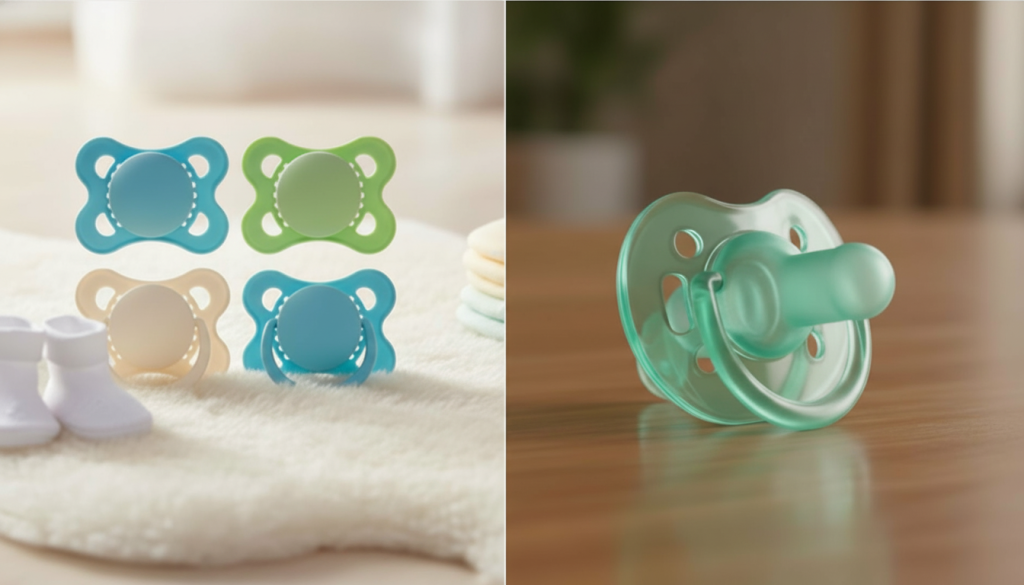
Choosing the right pacifier isn’t just about brand loyalty—it’s about comfort, acceptance, safety, and practicality. Two of the most trusted names in the baby world—MAM and Philips Avent—take very different approaches. So which one do babies actually prefer?
Overview: Two Different Design Philosophies
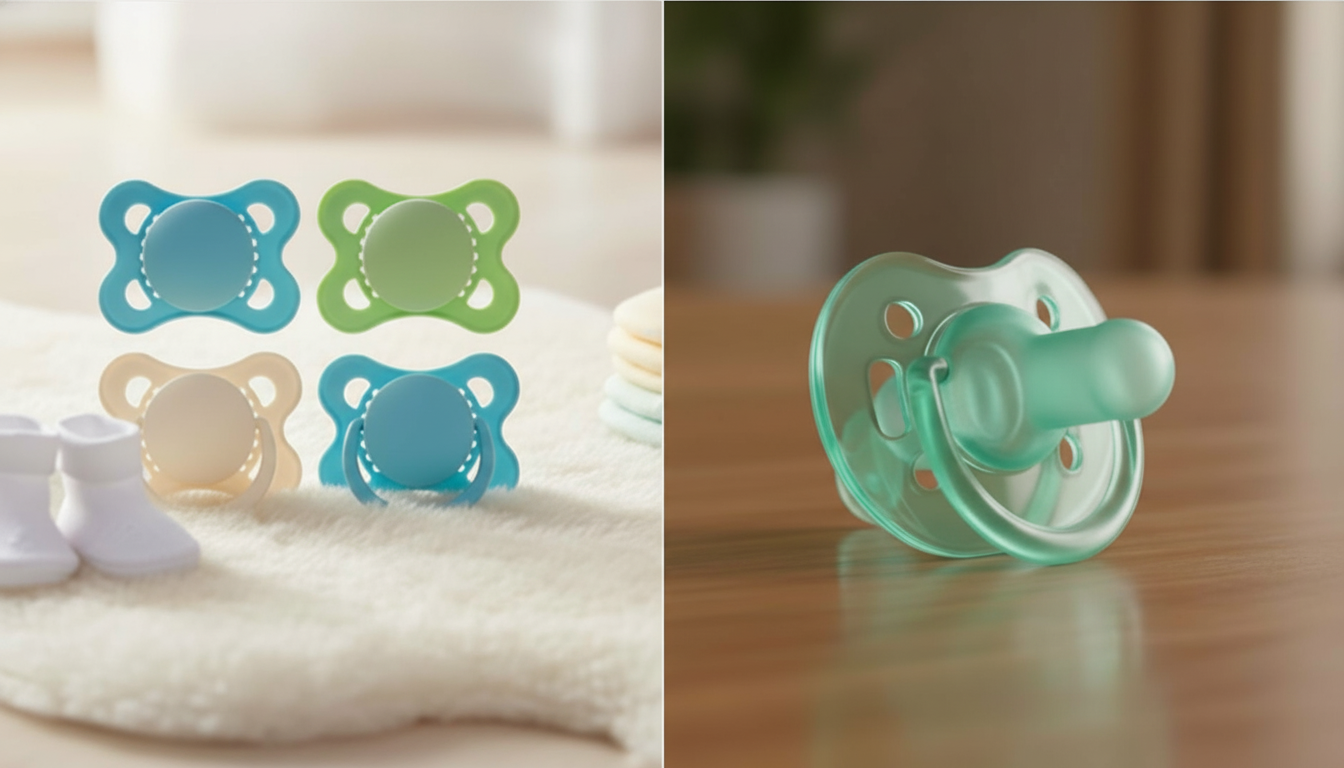
- MAM pacifiers focus on comfort and features: softer nipples, airflow shields, and added convenience like sterilizing cases.
- Philips Avent pacifiers emphasize simplicity: a one-piece silicone design widely used in hospitals and trusted for newborns.
Both are safe, orthodontic-friendly, and widely recommended—but they serve different needs.
Do Babies Prefer MAM or Philips Avent?
Testing and parent feedback suggest that many babies tend to prefer MAM pacifiers, especially after the newborn stage.
- In independent testing, babies showed a strong preference for MAM designs due to their lightweight feel and soft, skin-like nipple texture
- However, Philips Avent pacifiers are highly accepted by newborns, especially in hospitals, thanks to their familiar shape and simplicity
👉 Bottom line:
- Newborns → often accept Philips Avent more easily
- Older babies → may prefer MAM for comfort and fit
Pros and Cons of MAM Pacifiers
Advantages
- Soft, skin-like nipple
- Designed to feel more natural and comfortable for babies
- Better stay-in-mouth performance
- Thinner, flexible nipple tends to hold better during sucking
- Excellent airflow design
- Large ventilation holes reduce drool buildup and skin irritation
- Convenient sterilizing case
- Can be sterilized quickly in the microwave without extra tools
- Multiple size options
- More tailored stages as baby grows
Disadvantages
- More parts = more cleaning effort
- Compared to one-piece designs
- Not commonly used in hospitals
- Less “default familiarity” for newborns
- Feature-heavy design
- May feel unnecessary for parents who prefer simplicity
Pros and Cons of Philips Avent Pacifiers
Advantages
- Hospital-trusted design
- Widely used in NICUs and newborn care settings
- One-piece silicone construction
- No joints or crevices → easier and more hygienic to clean
- High acceptance for newborns
- Shape mimics a natural nipple, reducing confusion
- Durable and safe materials
- Medical-grade silicone, BPA-free
Disadvantages
- Can fall out more easily
- Especially in younger babies
- Firmer nipple texture
- Some babies may find it less comfortable
- Limited features
- No sterilizing case, fewer design options
- Fewer size variations
- Less tailored to growth stages
Side-by-Side Comparison
| Feature | MAM Pacifiers | Philips Avent Pacifiers |
|---|---|---|
| Nipple feel | Soft, skin-like | Firmer silicone |
| Design | Multi-part, feature-rich | One-piece, minimalist |
| Baby acceptance | High (especially older babies) | Very high (especially newborns) |
| Cleaning | Moderate (more parts) | Very easy |
| Airflow | Excellent ventilation | Basic airflow holes |
| Hospital use | Rare | Very common |
| Extra features | Sterilizing case, glow options | Minimal |
| Fit stability | Stays in better | May fall out more |
Which One Should You Choose?
Choose MAM if:
- Your baby rejects other pacifiers
- You want maximum comfort and better fit
- You value convenience features like sterilizing cases
- Your baby is older than the newborn stage
Choose Philips Avent if:
- You have a newborn (0–3 months)
- You want a simple, hygienic, no-fuss design
- You prefer a pacifier commonly used in hospitals
- Easy cleaning is your top priority
Final Verdict: What’s the Best Option?
There’s no universal winner—because babies are extremely picky.
- Best overall for comfort: MAM
- Best for newborns: Philips Avent
- Best strategy: try both and let your baby decide
Experts consistently agree that baby preference outweighs design features—even the most advanced pacifier won’t work if your baby refuses it
Conclusion
When comparing MAM vs Philips Avent pacifiers, the real difference comes down to comfort vs simplicity.
- MAM excels in innovation, softness, and usability
- Philips Avent wins in reliability, hygiene, and newborn acceptance
👉 The smartest choice isn’t picking one brand—it’s testing both and following your baby’s lead.